Slaka Facts
| Area | 0.9 km² |
| Population | 342 |
| Male Population | 178 (52.1%) |
| Female Population | 164 (47.9%) |
| Population change (1975 to 2020) | +33.6% |
| Population change (2000 to 2020) | +222.6% |
| Median Age | 36.9 years (Male: 35.6, Female: 38.4) |
| Local Time | |
| Timezone | Central European Summer Time |
| Lat & Lng | 58.36667, 15.55000 |
Map of Slaka
Interactive Map
Slaka Population
Years 1975 to 2030
| Data | 1975 | 1990 | 2000 | 2015 | 2020 | 2025* | 2030* |
|---|---|---|---|---|---|---|---|
| Population | 256 | 126 | 106 | 128 | 342 | 342 | 372 |
| Population Density | 273.1 / km² | 134.4 / km² | 113.1 / km² | 136.5 / km² | 364.8 / km² | 364.8 / km² | 396.8 / km² |
* Projected
Sources: JRC (European Commission's Joint Research Centre) work on the GHS built-up gridSlaka Population change from 2000 to 2020
Increase of 222.6% from year 2000 to 2020
| Location | Change since 1975 | Change since 1990 | Change since 2000 |
|---|---|---|---|
| Slaka | +33.6% | +171.4% | +222.6% |
| Östergötland | — | — | — |
| Sweden | — | — | — |
Sources: JRC (European Commission's Joint Research Centre) work on the GHS built-up grid
Slaka Median Age
Median Age: 36.9 years
| Location | Median Age | Median Age (Female) | Median Age (Male) |
|---|---|---|---|
| Slaka | 36.9 yrs | 38.4 yrs | 35.6 yrs |
| Östergötland | 40.8 yrs | 42.1 yrs | 39.6 yrs |
| Sweden | 40.8 yrs | 41.8 yrs | 39.8 yrs |
Sources: CIESIN (Center for International Earth Science Information Network)
Slaka Population Density
Population Density: 365 / km²
| Location | Population | Area | Density |
|---|---|---|---|
| Slaka | 342 | 0.938 km² | 365 / km² |
| Östergötland | 442,290 | 14,655.1 km² | 30.2 / km² |
| Sweden | 9.6 million | 449,151.6 km² | 21.3 / km² |
Sources: JRC (European Commission's Joint Research Centre) work on the GHS built-up grid
Slaka Historical and Projected Population
Estimated Population from 1200 to 2100
Sources:
- JRC (European Commission's Joint Research Centre) work on the GHS built-up grid
- CIESIN (Center for International Earth Science Information Network)
- [Link] Klein Goldewijk, K., Beusen, A., Doelman, J., and Stehfest, E.: Anthropogenic land use estimates for the Holocene – HYDE 3.2, Earth Syst. Sci. Data, 9, 927–953, https://doi.org/10.5194/essd-9-927-2017, 2017.
Human Development Index (HDI)
Statistic composite index of life expectancy, education, and per capita income.
Source: [Link] Kummu, M., Taka, M. &Guillaume, J. Gridded global datasets for Gross Domestic Product and Human Development Index over 1990–2015. Sci Data 5, 180004 (2018) doi:10.1038/sdata.2018.4
Slaka CO2 Emissions
Carbon Dioxide (CO2) Emissions Per Capita in Tonnes Per Year
| Location | CO2 Emissions | CO2 Emissions Per Capita | CO2 Emissions Intensity |
|---|---|---|---|
| Slaka | 3,371 tn | 9.86 tn | 3,595.2 tons/km² |
| Östergötland | 3,613,848 tn | 8.17 tn | 246.6 tons/km² |
| Sweden | 93,354,240 tn | 9.75 tn | 207.8 tons/km² |
Sources: [Link] Moran, D., Kanemoto K; Jiborn, M., Wood, R., Többen, J., and Seto, K.C. (2018) Carbon footprints of 13,000 cities. Environmental Research Letters DOI: 10.1088/1748-9326/aac72a
Slaka CO2 Emissions
| 2013 CO2 emissions (tonnes/year) | 3,371 tn |
| 2013 CO2 emissions (tonnes/year) per capita | 9.86 tn |
| 2013 CO2 emissions intensity (tonnes/km²/year) | 3,595.2 tons/km² |
Recent Nearby Earthquakes
Magnitude 3.0 and greater
| Date▼ | Time↕ | Magnitude↕ | Distance↕ | Depth↕ | Location↕ | Link |
|---|---|---|---|---|---|---|
| 2/1/95 | 9:33 PM | 3.4 | 93.7 km | 10,000 m | Sweden | usgs.gov |
| 7/14/86 | 2:45 PM | 3.4 | 98.4 km | 10,000 m | Sweden | usgs.gov |
Source: U.S. Geological Survey (USGS)
Slaka
Slaka is a locality situated in Linköping Municipality, Östergötland County, Sweden with 592 inhabitants in 2010.
Slaka Wikipedia Page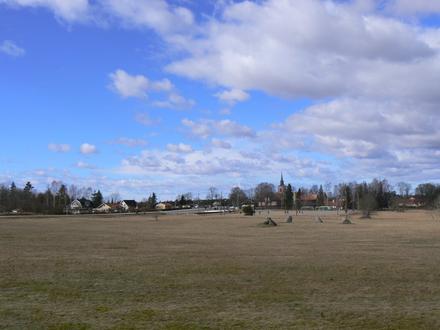


About Our Data
The data on this page is estimated using a number of publicly available tools and resources. It is provided without warranty, and could contain inaccuracies. Use at your own risk.